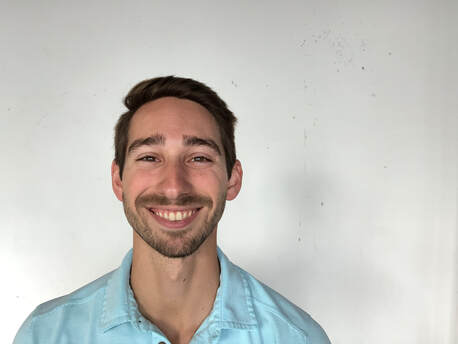
Dr. Nathan Kadlecek, PTIs a physical therapist committed to providing high quality health information, largely focused on lower back pain and the gross overuse of diagnostic imaging, medication, surgery, low quality treatment methods, and the over-diagnosis of pain conditions. He's also a powerlifter, pain nerd, macro-scale thinker, and wants to help you think differently about pain, healthcare, and life. |
|
 Personal Reflection and Building Sustainable Habits Do You Reflect? Well-being, wellness, health. What do those all mean? It’s an interesting debacle that we find ourselves in, always striving for more, looking forward to tomorrow yet ignoring both the past, and even more commonly, the present. I was recently told that I was impatient; not in my personal relationships, but with my professional and recreational life. I wanted my business to grow faster, so I was trying to cram in 10 things a day. I wanted my knowledge to increase exponentially, so I was continuously listening to audiobooks (not a bad thing but wasn’t taking the time to reflect) I wanted to squat 100 more pounds in one month. The funny thing is, this “not being satisfied,” and trying to “grind,” and work as long and as hard as possible was causing me undue stress which was leading to poor sleep, eating, and lifting habits. This lack of patience was literally doing the opposite of what I wanted. I was trying to push a string. Upon hearing and reflecting on this comment from someone near and dear to me, I also thought of a recent book I read, Atomic Habits. The author, James Clear, talks about how we “fall to the level of our systems,” and that to truly improve over time, focus on getting “1% better everyday,” versus trying to cram everything into one day, or one week, or one month. By improving just a little bit each day, the amount that you will have improved over the course of a year will be monumental. My experience is also a parallel experience of many of my clients. After working with clients, hearing their stories, getting to know and understand how they think, and then reflecting on my own thoughts, i’ve found that many people never, ever take the time to sit still for 10, 15, or even 30 minutes and just reflect about past experiences, how they feel about their life, if they’re satisfied with relationships they have, why they behaved a certain way when certain words were said to them. The TV is always on, music is always on, they are always rushing to the next thing, and this goes on and on and on, for years, until a situation comes up and they’re forced to reflect. Why do we wait? Is this because we are afraid to delve into our own mind, fearful of what we might find, or is it because we have a lack of awareness, a lack of time? I suppose it’s likely a combination of all of these factors. I have an absolute fascination with reflection, human resilience (both body and mind), our ability to cope with challenging situations, how our experiences often create a reality we are unaware of, and how all of this plays into our overall relationship with pain, and well-being. Well-being is a combination of several key factors…
Each of these plays a part in how we see ourselves and ultimately how “well” we feel. I’ve put sleep and relationships up at the top of the list as I think everything else stems from these two things. If we aren’t sleeping and are constantly in a brain fog, it’s hard to “be ourselves.” It’s also challenging to muster up the energy to maintain and build healthy relationships when we’re chronically sleep deprived. There are not many things in life that feel as refreshing as a good night’s sleep. Don’t you agree? As Matthew Walker, PhD said in a recent podcast and in his best-selling book Why We Sleep and i’m paraphrasing here… “...if sleep were not biologically essential to our existence, it would have been selected out of our genetics as it puts us at a GREAT disadvantage when having to fend off predators who would want to eat us. It must be there for a good reason.” Similarly there have been several studies that have came out in recent years, looking into what the most important factors in well-being are that make people feel as though they lived a life that was meaningful and purposeful. Turns out a huge part of that is feeling like you have support from loved ones, and not feeling isolated. Isolation and exclusion is one of the worst things that can befall us as we are social creatures. It doesn’t matter if you are an extrovert or introvert, you need that social connection, it’s essential to our well-being. It makes us feel like we matter, like we have connected with another human on a profoundly deep level. For a look at a brief breakdown of the 70 year study from Harvard, check out this link. https://www.health.harvard.edu/mental-health/can-relationships-boost-longevity-and-well-being. Building Habits Everyone knows they need to exercise more, eat better, practice healthy spiritual and mental health routines, but it seems as though people just don’t care, aren’t aware of what that looks like, or struggle to create the time and space for these various habits to be formed. In the past, I would just assume people didn’t care. I would say things like “how could they NOT take care of themselves, it’s so irresponsible for them and everyone they love.” Then I came to realize it’s much more complicated than that. Behavior change is hard. Forming habits is hard. Which is why I love the book Atomic Habits by James Clear. As a rehab professional, I don’t view my job as only helping people learn to exercise more, choose better foods, improve their sleep, focus on their relationships, and prioritize mental health; I view my job and mission as helping people learn to develop and maintain habits that will long outlive the time they are spending with me. Atomic Habits provides numerous strategies that one can implement today, that will make a huge impact over time. For example, one strategy or system that you can implement is instead of just trying to use your will power to accomplish to go to the gym more or wake up earlier, why not instead change your environment? What does changing your environment mean? Put your alarm clock across the room, forcing you to get up in the morning so you can’t hit snooze. Pack your gym bag the night before and place it at the front door. Put your exercise time on the calendar with exactly what you are going to do. This will not ALWAYS be successful, but i’m all about odds. What are the odds you will hit snooze if you’re tired and the alarm is right next to you? Probably almost 100%. What are the odds you will crawl back into bed if the alarm is across the room and you turn your light on? Probably much much lower. Being successful 50% of the time is much better than being successful 0% of the time. I work with many people who experience a “failure,” and immediately lose the motivation and drive to continue. The loss or lack of self confidence, self efficacy, and self determination, seem to often be driving factors of this all or nothing mindset. For good habits, there is short term immediate discomfort and long term pleasure. For bad habits, there is short term pleasure and long term discomfort. Humans tend to not think of their future selves when making decisions. We have a disease called “it-won’t-happen-to-me-itis.” It’s probably the most prevalent disease in the world and is likely a cause of much of our pain that comes on later in life. The Take Away? Well-being and wellness are a combination of the below items:
I rank relationships and sleep highest as everything else will fall into place if you get those right. Habits are less about willpower and more about controlling and optimizing your environment. Make your environment work for you, not against you. Do you have strategies that have worked for you in building good habits and breaking bad ones? I’d love to hear them in the comments below! Dr. Nathan Kadlecek, PTIs a physical therapist committed to providing high quality health information, largely focused on lower back pain and the gross overuse of diagnostic imaging, medication, surgery, low quality treatment methods, and the over-diagnosis of pain conditions. He's also a powerlifter, pain nerd, macro-scale thinker, and wants to help you think differently about pain, healthcare, and life. Write something about yourself. No need to be fancy, just an overview.
0 Comments
 "Uncertainty always creates doubt, and doubt creates fear." Oscar Munoz — CEO, United Airlines (personal opinions aside of this guy — I like the quote) Uncertainty is a beast. “I’m really worried about this pain getting worse, I don’t know what to do. Will I need surgery?” he said. A past client of mine sent me a message on Instagram asking if I had some time to talk about a recent knee injury. He ran. It popped. He got scared. What do you think happened? Before I get into it, let’s talk about what he said first. “Will this get worse?” I think I get this question more than baristas at local coffee shops get the question “what’s the wifi password.” It’s a great question but it really is only a surface level question. Why are you worried the pain will get worse? Have you or a family member had previous experiences of something like this getting worse? Getting down to the root causes of the fear of this uncertainty is incredibly important. To battle this uncertainty, people have tried many things… the “sure-thing principle,” was proposed by L. J Savage, an economist as a way to deal with uncertainty. Here is an excerpt from a great book “Made to Stick:” "A businessman is thinking about buying a piece of property. There’s an election coming up soon, and he initially thinks that its outcome could be relevant to the attractiveness of the purchase. So, to clarify his decision, he thinks through both scenarios. If the Republican wins, he decides, he’ll buy. If the Democrat wins, he’ll do the same. Seeing that he’d buy in either scenario, he goes forward with the purchase, despite not knowing the outcome. This decision seems sensible—not many people would quibble with Savage’s logic. After this initial stream of logic, two other psychologists, Amos Tversky, and Elder Shafir had a different idea. Their example is as follows: "For instance, imagine that you’re in college and you’ve just completed an important final exam a couple of weeks before the Christmas holidays. You’d been studying for this exam for weeks, because it’s in a subject that’s important to your future career. You’ve got to wait two days to get the exam results back. Meanwhile, you see an opportunity to purchase a vacation during the holidays to Hawaii at a bargain-basement price. Here are your three options: You can buy the vacation today, pass on it today, or pay a five-dollar fee to lock in the price for two days, which would allow you to make your decision after you got your grade. What would you do? You may feel some desire to know the outcome of your exam before you decide, as did the students who faced this choice in the original experiment. So Tversky and Shafir simply removed this uncertainty for two groups of participants. These groups were told up front how they did on the exam. Some students were told that they passed the exam, and 57 percent of them chose to go on the trip (after all, it makes for a good celebration). Other students were told that they failed the exam, and 54 percent of them chose to go on the trip (after all, it makes for good recuperation). Both those who passed and those who failed wanted to go to Hawaii, pronto. Here’s the twist: The group of students who, like you, didn’t know their final exam results behaved completely differently. The majority of them (61 percent) paid five dollars to wait for two days. Think about that! If you pass, you want to go to Hawaii. If you fail, you want to go to Hawaii. If you don’t know whether you passed or failed, you. . .wait and see? This is not the way the “sure-thing principle” is supposed to behave. It’s as if our businessman had decided to wait until after the election to buy his property, despite being willing to make the purchase regardless of the outcome. Tversky and Shafir’s study shows us that uncertainty—even irrelevant uncertainty—can paralyze us." Heath, Chip. Made to Stick (p. 36). Random House Publishing Group. Kindle Edition.  Isn’t that fascinating?? Due to uncertainty that was created, over an outcome they had literally 0 control over, they still wanted to wait until they had all the answers. And… once they did, they chose to go to Hawaii regardless of the outcome.
A similar study was done which posed two three scenarios, go to one of your favorite musicians, study for your test, or watch a new movie that’s out. The group that only had two choices, a larger percentage chose to go to the movies vs. study. BUT, when posed with two “fun” choices and studying, a much larger percentage chose to stay and study. This illustrates how sometimes when we have too many choices, even only three, it can be a bit overwhelming and we’ll choose something that we don’t really want. I think these scenarios apply fairly well to the rehab process, too, specifically when dealing with the uncertainty of what might be ailing us? Is it a muscle, a ligament, a bone, a nerve, is something out of alignment (I don’t believe this BTW), or is it something else? There are so many competing theories as to WHAT is the cause, and how do we find the exact cause of my pain. The amount of options tend to paralyze us and we go with the choice that "comfortable," because at least we "know what we're getting." If we only knew the exact cause in every case then we could be sure that the pain would not get worse, right? You’d think so but it’s not that simple… let’s talk about back pain for a second. Once cancer, inflammatory disorders, infection, fracture, and other red flags have been ruled out, it’s very unclear as to what specific structures are contributing MOST to the pain experience. This is largely in part to the complex nature of pain, meaning it is a combo of biological, psychological, sociological components which we simply aren’t able to measure down to a singular level of specificity (yet). And finally, circling back to our friend with the knee that popped; he heard this pop while running, was fearful of what could have happened, and then the uncertainty, coupled with things he had read created more fear. The conversation we had determined it wasn’t swollen, it hurt to extend it, and it had only been about 1 week since the incident. There was no instability whatsoever and the pain was tolerable. This definitely wasn’t an ACL tear (something this person was worried about), and also, even if it was a meniscal tear (also unlikely), it was way too early to even go down the route of talking injections or surgery. When something happens that we don’t expect and aren’t experienced in dealing with, we often jump to conclusions and choose interventions that may not make the most sense. We jump to the craziest conclusions and often the worst case scenario. Next time something happens in your life that you don’t have much experience with, try to resist that urge to jump to the worst case scenario. Find someone who knows what they’re talking about and get their perspective! It’s totally normal to find uncertainty unnerving — and sometimes clearing up uncertainty with “what it’s not” is the best thing we've got! I’m curious… how do you deal with uncertainty? Do you fear it, or do you come up with solutions to address it?  "The quest for more success and status (for the sake of success and status) often leads to the slow erosion of meaningful relationships" - MEA perpetually happy, exciting, pain free life. It seems like this is what we all want. There is a catch though... we don’t want to put in the work. There is another catch... we won’t always be happy, life won’t always be exciting, and pain will come and go. I’ve been thinking about this quite a bit as of late. When reflecting on conversations I’ve had with friends, family, and patients, I recognize most people are trying to reach an idealized life without struggle or pain. This type of life is exulted on social media, TV, from our friend groups, even our family. Scroll for two minutes on Instagram and you’ll no doubt get bombarded with perfectly edited photos of people, homes, and other trinkets. We want the perfect marriage, the perfect body, the perfect family, the perfect job, the perfect home. We are obsessed with perfect scores on tests, saddened when we are less than perfect. This also leaks over into our expectations of others. We expect others to be perfect, to be without fault, and when a mistake is made we ruthlessly jump to conclusions that they were acting out of malice. We expect perfection of others yet expect others to take us as imperfect. This obsession with perfection also ties into how we view success. Success and wealth go hand in hand with this perfect life, so society says. Many of us want this success and wealth, however, I’ve observed two things: 1. We want wealth but are envious but also spiteful of those who have it, 2. We expect that if we had wealth, life would be infinitely better and we would be exceedingly more happy. It’s true, that people living in poverty would have a better life with more wealth, and increase in happiness, to a point. It is not true, that massive amounts of wealth lead to a greater and more fulfilling life. There are plenty of people who are wealthy and miserable, routinely logging 60+ hr work weeks and sacrificing everything they care about. In the past couple years, I’ve interacted with hundreds of business owners and entrepreneurs, and individuals in the workforce who are so focused on building and growing their business, progressing in their career, and working seven days/week for months, sometimes years at a time. This sacrifice of time with family and friends often leads to burnout and the severing of the relationships that they initially got into business for. Many business owners got into business as a way to a better life for them and their family but it turned into an all consuming force that has wreaked or is wreaking havoc on their relationships. I see this all too often with professionals. The quest for more success and status (for the sake of success and status) often leads to the slow erosion of meaningful relationships. If you are this person, stop. Stop and read this paragraph again. Why are you working so hard? Hard work, embracing struggle, and being persistent is certainly necessary for any type of success in this life, however, the priority should not be these things. Could you accomplish the same if you also maintained healthy relationships with your significant other, friendships, and family? (This question was rhetorical, of course you can). Hard work does not equal smart work. Let’s not be consumed by the struggle and the act of working hard. Let’s prioritize our relationships and the positive impact we can have on others. If we do this, we’ll likely be able to accomplish more than we ever thought possible and to live a life filled with meaning and purpose. AuthorNathan Kadlecek is a Doctor of Physical Therapy, health nut, powerlifter, and seeks to answer somewhat unanswerable questions.  Is Fear the Precursor to Our Anxiety?Is fear the opposite of confidence? Can you be confident and fearful at the same time? Is anxiety the same as fear? Does fear cause anxiety or can anxiety manifest without fear? What is success? I’m not a clinical psychologist and I’m not going to pretend to play one on the internet, however I’m pondering these questions. Many people, myself included have been fearful, anxious, and confident at times. I recall going through school and preparing for my national board exam for physical therapy that I was fearful I wouldn’t pass and anxious (restless) likely due to the unknown. However, at the same time... I was confident that I had studied adequately, confident that my schooling had more than prepared me, and the fact that I passed all of my practice tests gave me a statistical certainty that I would pass on the first try. My mindset at that time was that I was going to pass but I was nervous that I wouldn’t pass. I was fearing the negative outcome (although it was statistically very very low) and anxious because if I did not pass, how would I view myself, how would those around me view me, how could I survive without having a job that would pay the bills. Reflecting back it seems that my anxiety and fear was due to the anticipation of how I would feel if those things were to come to pass rather than the things themselves. ‘Perception is reality’ Not only have I felt this way when studying in school but also in my personal relationships, business relationships, and back when I was a high school and collegiate athlete. What happens if my family member doesn’t recover from their heart surgery, how will I manage working 40 hours a week as a W-2 and simultaneously build a business? Why am I not improving my athletic ability and will I ever become better? Will I actually be successful, and, what is success? I’ve experienced and continue to experience these questions and I try to think about them in the following way. The unknown is always anxiety producing because we always want things to workout. We always want to plan for all of the little details. We want the world to behave exactly as we predict. Just imagine, how wonderful it would be if all things went exactly according to plan without any hiccups. What a glorious (and somewhat boring) life that would be. If roadblocks get in the way of what we’re trying to do and it seems like the resistance is mounting, this is a time where many of these feelings and questions come into play. “Am I good enough,” “Do I belong here,” “Will this ever workout?” ‘The best laid plans of mice and men...’ If you’ve met me and chatted with me, I’m definitely more of a laid back guy, someone who is usually pretty relaxed. Although... I do have a history of getting fired up when talking about pain, sports, healthcare, politics, and cognitive biases/logic. With that being said, I try not to take things too seriously and I recognize that when working with people we are all coming at the same problem with a different perspective, expectations, and beliefs. In moments of introspection I recognize that my own feelings and beliefs mirror those of nearly every human on the planet. That my perceived suffering is not unique. We all experience feelings of profound doubt, fear, and anxiety. Some among us certainly experience this to a stronger degree if ranked on a scale of 0-10 and this is likely due to a multitude of factors including, environment and biological predispositions. There is solace in knowing that you are not the only one. This is not necessarily a ‘misery loves company,’ feeling rather a, ‘I’m not alone,” feeling. I also find that when I become so future focused and neglect to appreciate the process, that this will cause a greater deal of anxiety and ultimately will decrease my progress towards a particular goal. The approach that I have taken to decrease this feeling is to set a goal, create a plan, and execute. What’s also been helpful is to track execution, to log it and when I’m feeling anxious, like i’m not doing enough, to look at all the things I have done. Create benchmarks for yourself and modify your approach to get there if your current approach isn’t working well. Life’s about trial and error. ‘The more errors you make, and the quicker you learn from them, the faster you will reach where you are attempting to go.’ ‘Fail fast and fail often’ This is the iterative process in its purest form. Not being afraid of failure, but embracing it as a learning process, to do it better the next time, and the next time, and the next time. Then, don’t stop. To your introspection, Nate Want to read more of my ramblings and watch more of my videos? Click the button below and it'll take you back to the main blog page. Cheers!
|
Archives
May 2021
Categories
All

|
 RSS Feed